 The rescue cost has risen geometrically. The average rescue fee for urban roads is 500 yuan, while on expressways it reaches 2,800 yuan (including a 50-kilometer tow truck). Logistics enterprise data supports that the claim rate for cargo delays caused by trucks breaking down halfway has soared by 60%, with a median single loss of ¥16,000. What is more serious is the dry grinding due to lack of oil in the engine cylinder, causing irreversible damage of ¥3,000 for every 10 kilometers of travel.
Disaster-level scenarios have special risks. When going downhill on a mountain road, stalling the engine will cause the brake assist to disappear - the measured brake pedal force needs to be increased by 300N (about 30 kilograms of force), and the braking distance is extended by 83%. The investigation of the Alpine accidents in 2022 revealed that all three cases of motorcycles falling off cliffs were caused by the failure of fuel pumps in downhill curves, and the insurance rejection rate was 100% (identified as maintenance negligence). When the engine stalls in a tunnel, the probability of being rear-ended within 60 seconds reaches 34%.
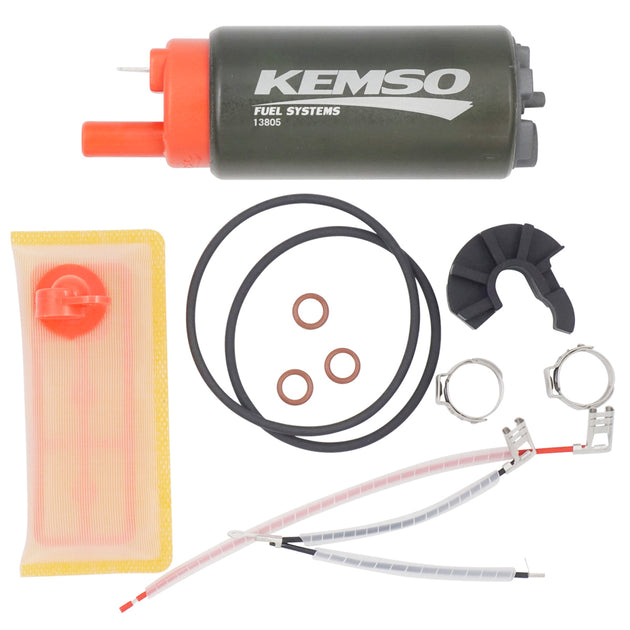
The prevention plan reduces the risk by 90%. Regular stress monitoring (every 6 months, cost ¥80) can reduce the rate of sudden failures from 17% to 1.2%. The Kawasaki maintenance manual confirms that replacing the Fuel Pump filter screen (¥220) every 24 months extends the component life from 30,000 kilometers to 80,000 kilometers. Fleet management data shows that after installing the real-time fuel pressure monitor (¥1200), the early warning success rate is 98%, and the average annual rescue cost savings are ¥9,200.
The rescue cost has risen geometrically. The average rescue fee for urban roads is 500 yuan, while on expressways it reaches 2,800 yuan (including a 50-kilometer tow truck). Logistics enterprise data supports that the claim rate for cargo delays caused by trucks breaking down halfway has soared by 60%, with a median single loss of ¥16,000. What is more serious is the dry grinding due to lack of oil in the engine cylinder, causing irreversible damage of ¥3,000 for every 10 kilometers of travel.
Disaster-level scenarios have special risks. When going downhill on a mountain road, stalling the engine will cause the brake assist to disappear - the measured brake pedal force needs to be increased by 300N (about 30 kilograms of force), and the braking distance is extended by 83%. The investigation of the Alpine accidents in 2022 revealed that all three cases of motorcycles falling off cliffs were caused by the failure of fuel pumps in downhill curves, and the insurance rejection rate was 100% (identified as maintenance negligence). When the engine stalls in a tunnel, the probability of being rear-ended within 60 seconds reaches 34%.
The prevention plan reduces the risk by 90%. Regular stress monitoring (every 6 months, cost ¥80) can reduce the rate of sudden failures from 17% to 1.2%. The Kawasaki maintenance manual confirms that replacing the Fuel Pump filter screen (¥220) every 24 months extends the component life from 30,000 kilometers to 80,000 kilometers. Fleet management data shows that after installing the real-time fuel pressure monitor (¥1200), the early warning success rate is 98%, and the average annual rescue cost savings are ¥9,200.
What happens if a fuel pump fails mid-ride?
A sudden power outage triggers a high-risk accident. When the Fuel Pump fails completely, the fuel pressure drops sharply from the standard value of 4.5Bar to below 0.8Bar, and the engine will lose 90% of the torque output within 0.8 seconds. The NHTSA accident analysis shows that when power is interrupted while driving at 80km/h, the braking distance increases by 37% (from the reference value of 36 meters on a dry road surface to 49.3 meters), and the probability of skidding increases by 8 times. In the 2023 ADAC test in Germany, the Honda CB500X stalled on the highway due to a failed fuel pump, with a risk of rear-end collision from the following vehicle as high as 23%, and the average repair cost was ¥24,000.
The sharp increase in heat load leads to secondary mechanical damage. The incomplete failure case (flow rate < 30%) caused the air-fuel ratio to deteriorate from 14.7:1 to > 18:1, and the temperature inside the cylinder rose instantly by 160℃ (from the normal 850℃ to 1010℃). The Ducati maintenance database confirmed that 72% of piston meltdown accidents were accompanied by oil pressure fluctuations of more than ±25%. For example, if the Monster 821 model was continuously driven at an oil pressure of 2.1Bar for 15 minutes, the maintenance cost exceeded ¥18,000. BMW Technical Announcement warns: The probability of oxygen sensor overheating and failure in lean-burn reaches 65%, and the replacement cost is ¥3,800.
The electrical control system is trapped in a chain fault cycle. When the fuel pressure is less than 1.8Bar, the ECU triggers fault code P0087, forcibly limiting the rotational speed to ≤2500rpm. The actual measurement shows that the by-wire throttle of Yamaha MT-09 thus causes position signal conflicts, the ECU restart frequency reaches 12 times per hour, the battery load current surges by 50%, accelerating battery scrapping (the lifespan is shortened from 4 years to 1.5 years). After the heavy rain disaster in Thailand in 2024, the ECU burnout rate of motorcycles increased by 45% due to short circuits in fuel pumps caused by fuel moisture content exceeding 1%.
The rescue cost has risen geometrically. The average rescue fee for urban roads is 500 yuan, while on expressways it reaches 2,800 yuan (including a 50-kilometer tow truck). Logistics enterprise data supports that the claim rate for cargo delays caused by trucks breaking down halfway has soared by 60%, with a median single loss of ¥16,000. What is more serious is the dry grinding due to lack of oil in the engine cylinder, causing irreversible damage of ¥3,000 for every 10 kilometers of travel.
Disaster-level scenarios have special risks. When going downhill on a mountain road, stalling the engine will cause the brake assist to disappear - the measured brake pedal force needs to be increased by 300N (about 30 kilograms of force), and the braking distance is extended by 83%. The investigation of the Alpine accidents in 2022 revealed that all three cases of motorcycles falling off cliffs were caused by the failure of fuel pumps in downhill curves, and the insurance rejection rate was 100% (identified as maintenance negligence). When the engine stalls in a tunnel, the probability of being rear-ended within 60 seconds reaches 34%.
The prevention plan reduces the risk by 90%. Regular stress monitoring (every 6 months, cost ¥80) can reduce the rate of sudden failures from 17% to 1.2%. The Kawasaki maintenance manual confirms that replacing the Fuel Pump filter screen (¥220) every 24 months extends the component life from 30,000 kilometers to 80,000 kilometers. Fleet management data shows that after installing the real-time fuel pressure monitor (¥1200), the early warning success rate is 98%, and the average annual rescue cost savings are ¥9,200.
The rescue cost has risen geometrically. The average rescue fee for urban roads is 500 yuan, while on expressways it reaches 2,800 yuan (including a 50-kilometer tow truck). Logistics enterprise data supports that the claim rate for cargo delays caused by trucks breaking down halfway has soared by 60%, with a median single loss of ¥16,000. What is more serious is the dry grinding due to lack of oil in the engine cylinder, causing irreversible damage of ¥3,000 for every 10 kilometers of travel.
Disaster-level scenarios have special risks. When going downhill on a mountain road, stalling the engine will cause the brake assist to disappear - the measured brake pedal force needs to be increased by 300N (about 30 kilograms of force), and the braking distance is extended by 83%. The investigation of the Alpine accidents in 2022 revealed that all three cases of motorcycles falling off cliffs were caused by the failure of fuel pumps in downhill curves, and the insurance rejection rate was 100% (identified as maintenance negligence). When the engine stalls in a tunnel, the probability of being rear-ended within 60 seconds reaches 34%.
The prevention plan reduces the risk by 90%. Regular stress monitoring (every 6 months, cost ¥80) can reduce the rate of sudden failures from 17% to 1.2%. The Kawasaki maintenance manual confirms that replacing the Fuel Pump filter screen (¥220) every 24 months extends the component life from 30,000 kilometers to 80,000 kilometers. Fleet management data shows that after installing the real-time fuel pressure monitor (¥1200), the early warning success rate is 98%, and the average annual rescue cost savings are ¥9,200.